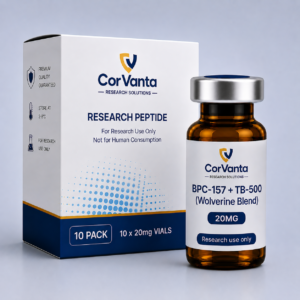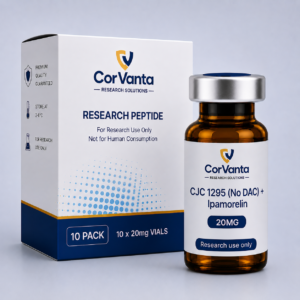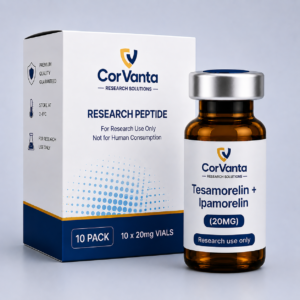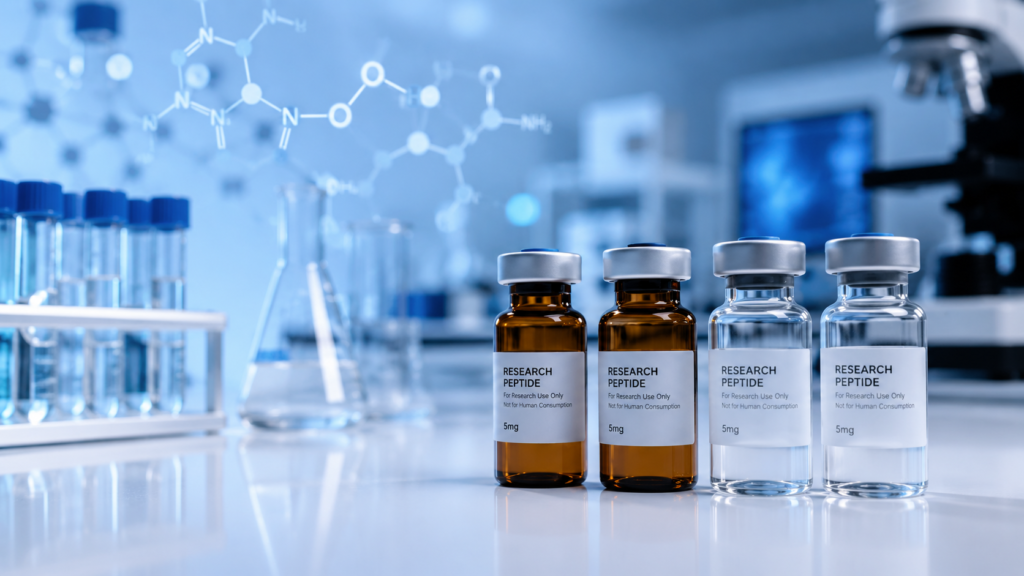
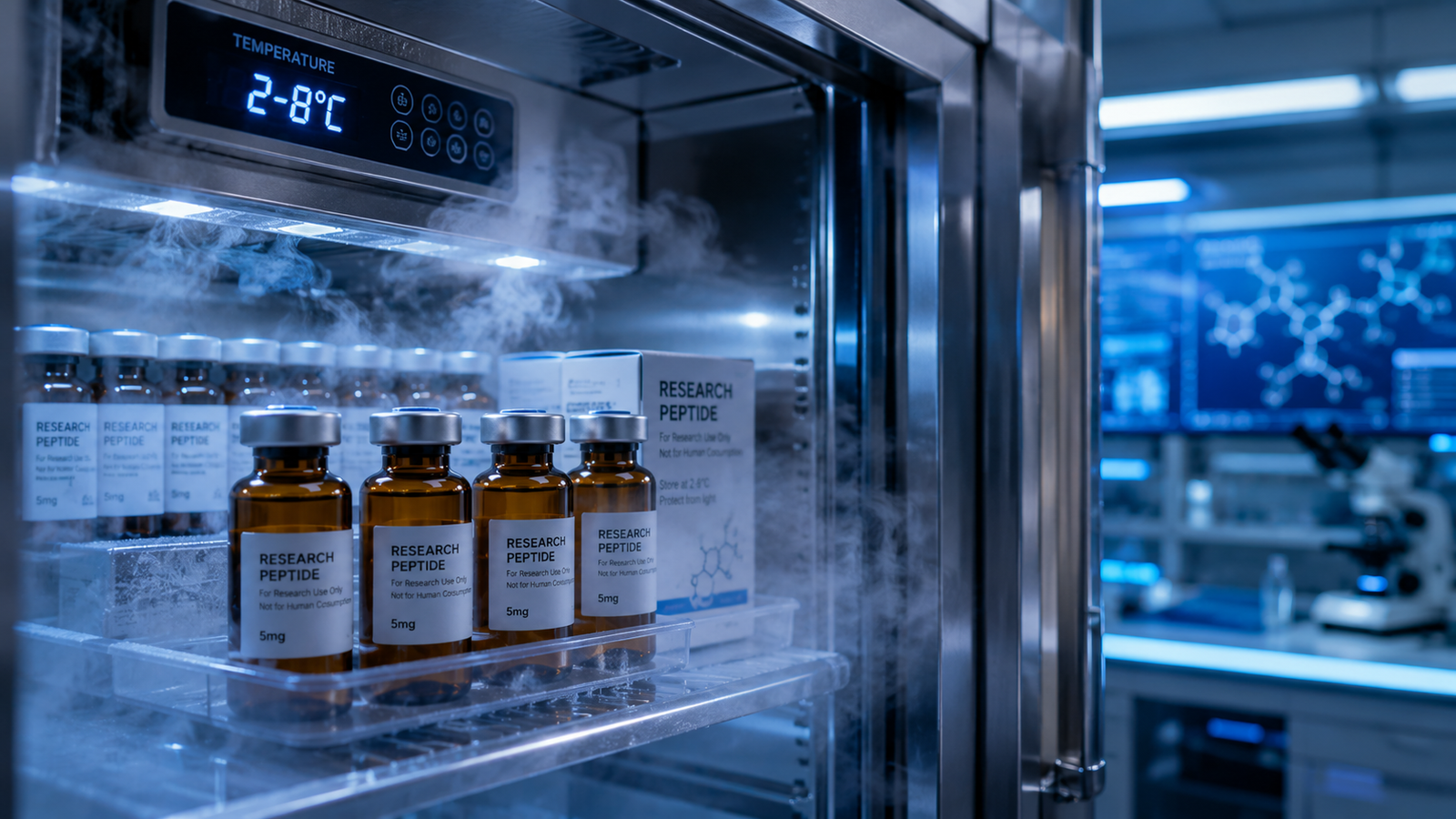
Research peptides are valuable tools used in laboratory and scientific research. Like many biological compounds, however, peptides are sensitive to environmental conditions such as temperature, moisture, oxygen, and light. Proper storage helps preserve the integrity of Research Use Only (RUO) peptides and promotes consistent, reproducible laboratory results.
Whether you’re storing peptides for a few days or several months, following established laboratory handling practices can help maintain peptide stability throughout their intended research lifecycle.
Why Proper Storage Matters
Peptides are chains of amino acids that can gradually degrade when exposed to unfavorable conditions. Factors that may affect peptide stability include:
- Excessive heat
- Moisture and humidity
- Ultraviolet (UV) light
- Oxygen exposure
- Repeated freeze-thaw cycles
Improper storage can contribute to chemical changes such as hydrolysis, oxidation, and aggregation, potentially affecting the consistency of research materials over time.
Store Lyophilized Peptides Correctly
Most RUO peptides are supplied as a lyophilized (freeze-dried) powder, which is the most stable form for long-term storage.
General laboratory recommendations include:
- Store at –20°C for long-term storage.
- Keep vials tightly sealed until ready for laboratory use.
- Protect from moisture using airtight storage containers.
- Store away from direct sunlight and excessive heat.
- Limit unnecessary handling of unopened vials.
When kept dry and protected from environmental exposure, lyophilized peptides generally remain significantly more stable than peptides stored in solution.
Protect Peptides From Light
Light exposure—particularly ultraviolet (UV) light—can accelerate degradation in certain peptide sequences, especially those containing light-sensitive amino acids.
To minimize light exposure:
- Store peptides in amber glass vials whenever possible.
- Keep products in their original packaging until needed.
- Avoid prolonged exposure to laboratory lighting or direct sunlight.
Amber borosilicate glass provides an additional layer of protection by reducing UV transmission, making it a preferred packaging option for many research laboratories.
Minimize Moisture Exposure
Moisture is one of the primary contributors to peptide degradation. Even small amounts of humidity can initiate hydrolysis, reducing long-term stability.
Best practices include:
- Allow frozen vials to reach room temperature before opening to reduce condensation.
- Keep containers tightly sealed after use.
- Store peptides in a dry environment.
- Avoid leaving vials open longer than necessary.
These simple precautions help maintain the integrity of lyophilized research compounds.
Handle Reconstituted Peptides With Care
Once a peptide has been reconstituted into solution, it becomes considerably less stable than its lyophilized counterpart.
General laboratory guidance recommends:
- Refrigerate reconstituted peptides at 2–8°C.
- Avoid repeated freeze-thaw cycles whenever possible.
- Consider aliquoting solutions into smaller laboratory containers if repeated use is anticipated.
- Label all containers with the peptide name, concentration, and preparation date to support laboratory recordkeeping.
Because stability varies depending on peptide sequence and formulation, researchers should always follow laboratory protocols appropriate for their specific application.
Common Storage Mistakes to Avoid
Several avoidable handling practices can reduce peptide stability:
- Storing peptides in direct sunlight.
- Opening frozen vials immediately after removing them from the freezer.
- Allowing moisture to enter lyophilized vials.
- Repeatedly warming and refreezing the same solution.
- Storing peptides at elevated temperatures for extended periods.
Implementing consistent storage procedures helps reduce unnecessary environmental stress on research compounds.
A Simple Storage Checklist
For optimal laboratory handling:
- Store lyophilized peptides at –20°C for long-term storage.
- Keep peptides dry and tightly sealed.
- Protect vials from UV light.
- Use amber glass containers whenever possible.
- Refrigerate reconstituted peptides at 2–8°C.
- Minimize freeze-thaw cycles.
- Label and document stored materials appropriately.
Final Thoughts
Proper storage is an essential component of maintaining the quality of Research Use Only peptides. By controlling temperature, limiting moisture exposure, protecting compounds from light, and following sound laboratory handling practices, researchers can help preserve peptide integrity and support reliable experimental outcomes.
As with any laboratory reagent, storage recommendations may vary depending on the peptide sequence and intended research application. Always review available product documentation and follow established laboratory protocols.
References
- Loti Labs. Comprehensive Peptide Storage Guide: Lyophilized and Reconstituted Compounds. https://www.lotilabs.com/resources/peptide-storage-guide-lyophilized-reconstituted/
- Peptra Labs. Peptide Stability and Storage: A Laboratory Protocol Guide for Research Peptides. https://www.peptralabs.com/research/peptide-storage-protocol